Buying guide
OLED vs QLED for Bright Rooms: Which Should You Buy?
In a sunny living room, brightness and glare matter more than perfect blacks. Here's how OLED and QLED/mini-LED really compare for bright rooms in 2026 — and what to buy.
"OLED vs QLED" is the most common TV question we get, and the honest answer depends almost entirely on your room. In a dark home theater, OLED's perfect blacks usually win. In a bright room full of windows, the math changes — brightness and glare handling matter more than absolute contrast.
The 2026 twist is that the gap has narrowed from both sides: OLEDs are brighter and some now have matte anti-glare screens, while the best QLED/mini-LEDs keep getting better contrast. This guide explains the trade-off in plain language and gives concrete picks. As with all our recommendations, it's research synthesis from public reviews and specs, not our own lab testing.
The short list
| # | Best for | TV | Est. price | |
|---|---|---|---|---|
| 01 | Best bright-room premium pick | 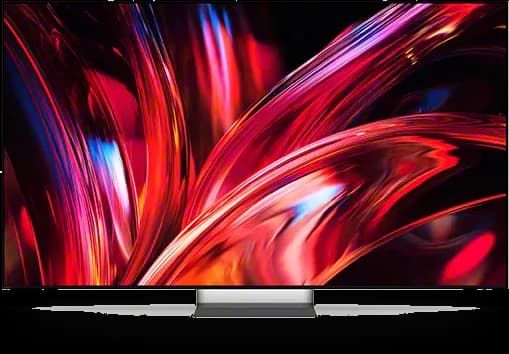 | RGB Mini-LED | ~$3,600 |
| 02 | Best OLED for mixed light | 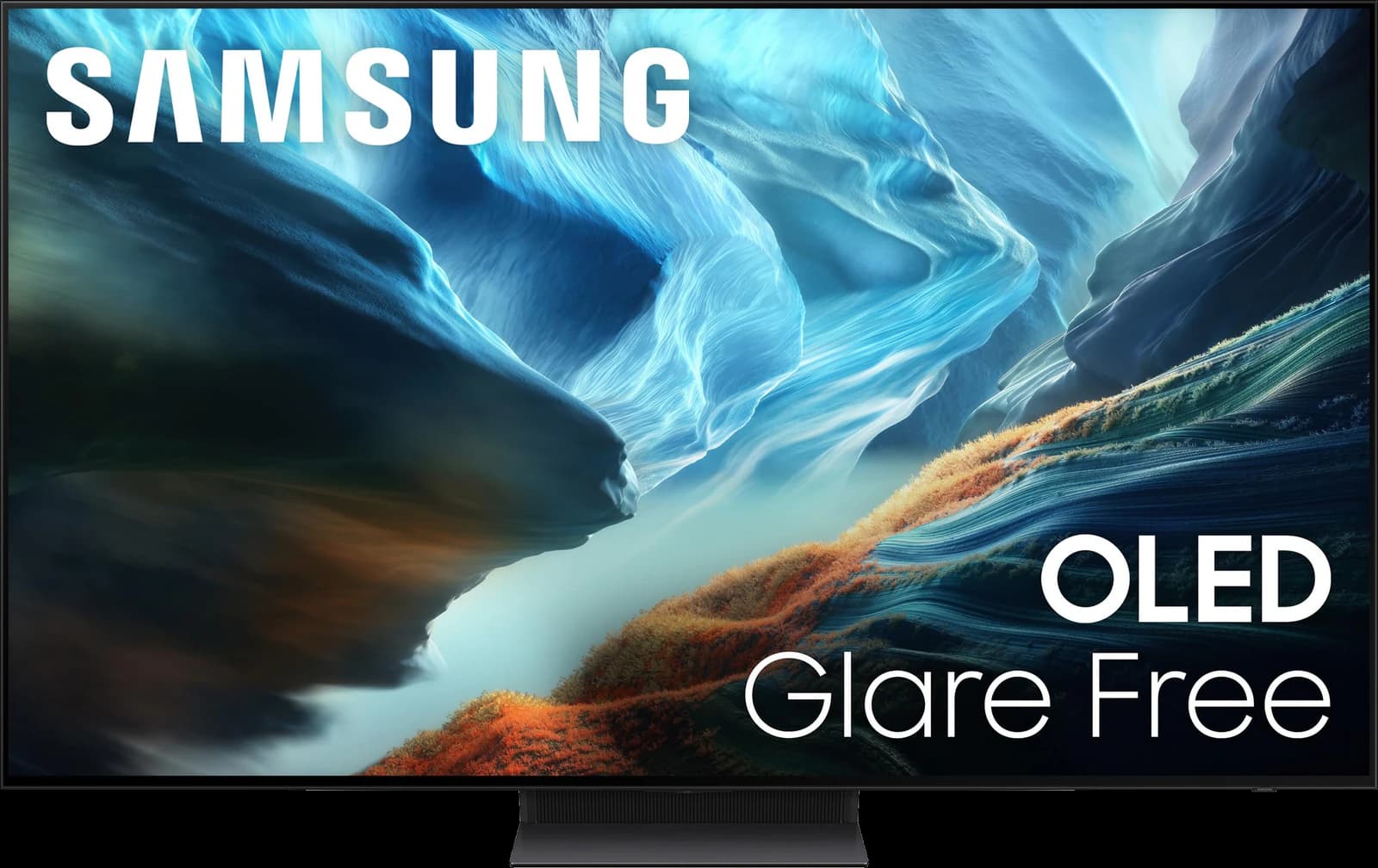 | QD-OLED | ~$2,200 |
| 03 | Best bright-room value | 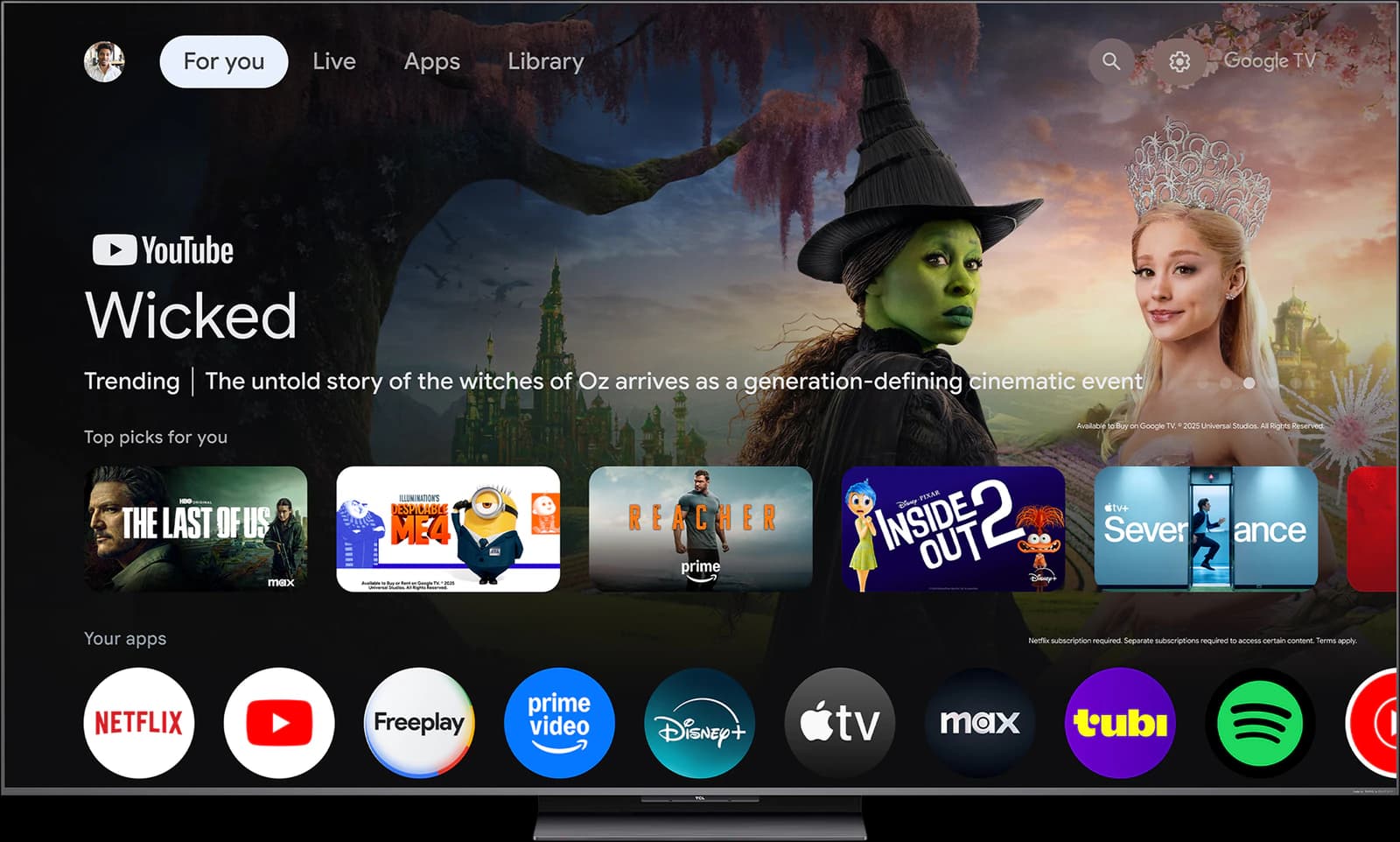 | Mini-LED QLED | ~$1,300 |
Prices are rough street-price estimates, not live quotes.
Ranked
Our picks
- 01
Best bright-room premium pick
Sony Bravia 9 II
- RGB Mini-LED
- 2026
- 65–85"
- ~$3,600
Sony's flagship mini-LED shrugs off daylight while still looking cinematic at night, thanks to excellent processing and dimming.
Highlights
- Highlight: True RGB Mini-LED backlight for high brightness and wide color
- Highlight: Class-leading Sony processing, motion, and reflection handling
- Highlight: Superb for sports and daytime movie watching
- Highlight: Google TV plus ATSC 3.0 on many sizes
Trade-offs
- Trade-off: Expensive — often thousands above value mini-LEDs like the TCL QM8L
- Trade-off: Only two HDMI 2.1 ports
- Trade-off: Some blooming is inherent to LCD local dimming versus OLED
More views
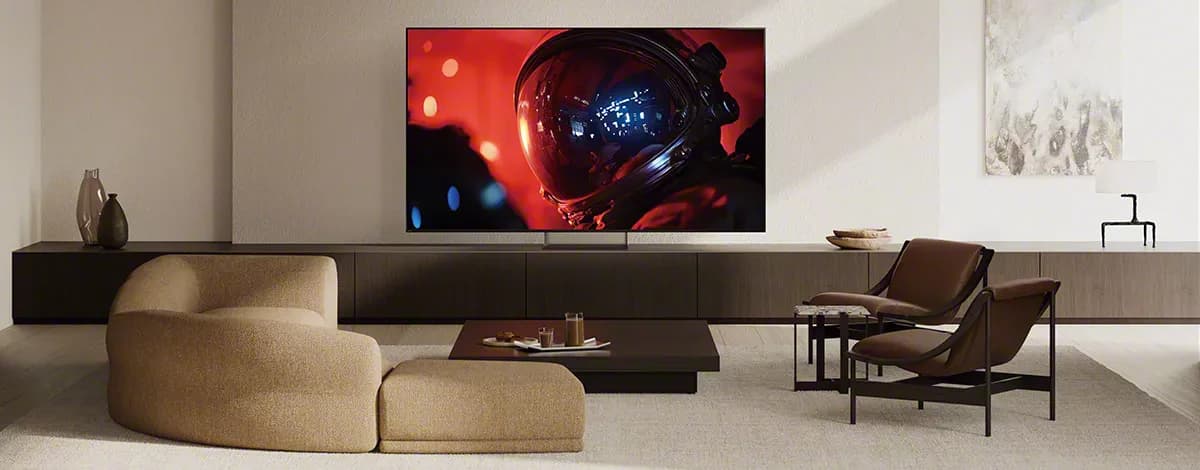
Images: Sony
- Bright room
- 5 out of 5
- Dark room
- 4 out of 5
- Movies
- 5 out of 5
- Sports
- 5 out of 5
- Gaming
- 4 out of 5
- Value
- 2 out of 5
Editorial fit scores, 1–5 — not lab measurements.
Check priceAffiliate link — opens a retailer search.
- 02
Best OLED for mixed light
Samsung S90H OLED
- QD-OLED
- 2026
- 42–83"
- ~$2,200
A bright OLED with a glare-reducing screen that closes much of the daytime gap while keeping per-pixel contrast for movie nights.
Highlights
- Highlight: QD-OLED color volume with Glare Free tech on the S90H
- Highlight: Motion Xcelerator up to 165Hz with G-Sync and FreeSync Premium Pro
- Highlight: Four HDMI 2.1 ports and a polished Game Bar
- Highlight: Strong HDR punch for mixed lighting versus a traditional WOLED
Trade-offs
- Trade-off: No Dolby Vision — HDR10+ and HDR10 only on Samsung sets
- Trade-off: Tizen is polarizing; some prefer webOS or Google TV
- Trade-off: Panel type can vary by size/region historically — confirm the listing
- Bright room
- 4 out of 5
- Dark room
- 5 out of 5
- Movies
- 5 out of 5
- Sports
- 4 out of 5
- Gaming
- 5 out of 5
- Value
- 4 out of 5
Editorial fit scores, 1–5 — not lab measurements.
Check priceAffiliate link — opens a retailer search.
- 03
Best bright-room value
TCL QM8L
- Mini-LED QLED
- 2026
- 65–98"
- ~$1,300
Enormous brightness per dollar — the value way to beat glare, at roughly $1,300 for 65 inches.
Highlights
- Highlight: Huge peak brightness and strong local dimming for the money
- Highlight: Available in very large sizes (75/85/98) at aggressive street prices
- Highlight: Good gaming feature set with high refresh and VRR
- Highlight: Google TV with a full streaming app catalog
Trade-offs
- Trade-off: Blooming and viewing angles trail premium OLEDs and Sony processing
- Trade-off: Google TV can feel less polished than webOS on some days
- Trade-off: Build and speakers are value-tier versus flagship brands
More views
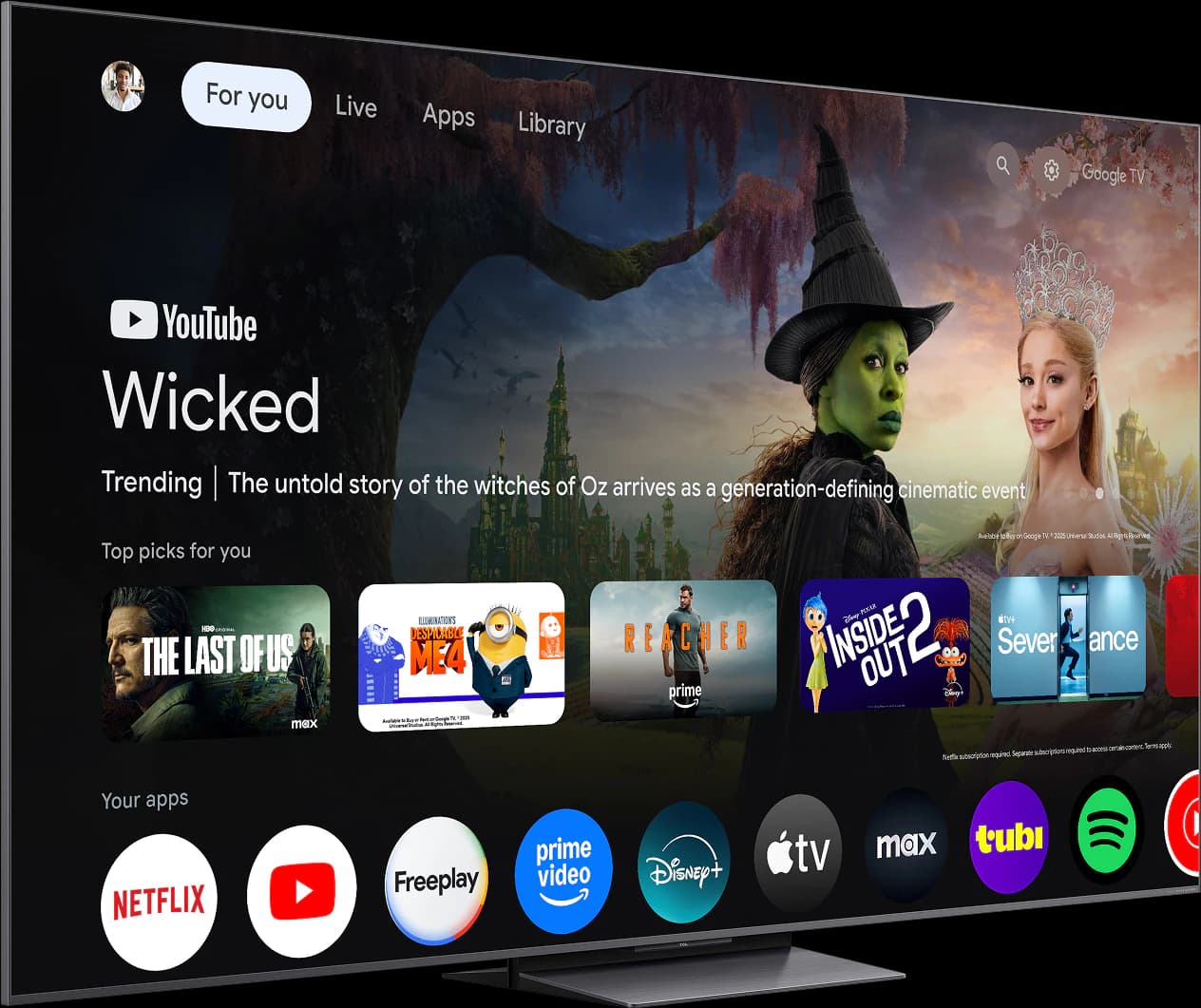
Images: TCL
- Bright room
- 5 out of 5
- Dark room
- 4 out of 5
- Movies
- 4 out of 5
- Sports
- 5 out of 5
- Gaming
- 4 out of 5
- Value
- 5 out of 5
Editorial fit scores, 1–5 — not lab measurements.
Check priceAffiliate link — opens a retailer search.
The short version
QLED is an LCD TV with a quantum-dot layer for richer color; the best QLEDs use mini-LED backlights to get very bright with good local contrast. OLED is self-lit per pixel, so it can turn pixels fully off for perfect blacks — but OLEDs don't sustain as much brightness across the whole screen.
In a bright room, a bright mini-LED QLED usually looks better because it overpowers ambient light. In a dark room, OLED pulls ahead. Brighter OLEDs with anti-glare screens — like Samsung's S90H and S95H — are now a strong middle path.
Why brightness beats black level in a sunny room
A TV's contrast on paper means little once sunlight is bouncing off the screen. Ambient light raises the apparent black level of any panel, so the TV that stays watchable is the one bright enough to punch through — and a good anti-reflective or matte screen helps more than spec sheets suggest.
- Look for high sustained full-screen brightness, not just peak highlights.
- A matte or effective anti-glare coating reduces distracting reflections.
- Wide viewing angles keep color consistent across a big sofa.
When OLED still makes sense in a bright room
If your room is bright only during the day and you do most serious watching in the evening, a bright QD-OLED like the Samsung S90H can be the best of both worlds — enough daytime punch, plus perfect nighttime contrast. For a truly sunny room, Samsung's S95H adds a matte glare-free finish that handles reflections better than any glossy screen. Just be realistic about windows directly facing the TV.
What changed in 2026
RGB mini-LED arrived at the high end. Instead of a blue or white backlight plus color filters, these TVs use red, green, and blue LEDs in the backlight, so they can stay colorful at very high brightness — a big deal in bright rooms. They're expensive today. The embedded Smart Home Sounds video compares Sony's Bravia 9 II with LG's and Samsung's flagship OLEDs if you want to see the new tech side by side.
Frequently asked questions
Is QLED better than OLED for a bright room?
Usually, yes. The best QLED/mini-LED TVs get much brighter than OLEDs across the whole screen, so they resist glare and ambient light better in a sunny room. OLED still wins in a dark room thanks to perfect blacks.
What about QD-OLED — is it the best of both?
QD-OLED (used in Samsung's S90H and S95H and Sony's Bravia 8 II) is brighter and more colorful than a conventional OLED while keeping per-pixel contrast, so it's a strong compromise for mixed lighting. A top mini-LED is still brighter for the harshest daytime glare.
Does burn-in matter for a bright-room TV?
Burn-in risk applies to OLED panels showing the same static content for long periods (news tickers, game HUDs, channel logos). For typical mixed viewing it's a small risk, but if you leave static images on for many hours daily, a QLED/mini-LED avoids the concern entirely.
Related guides
Disclosure: Our picks are independent and editorial — a synthesis of public reviews and specs, not our own lab measurements. We may earn a commission from qualifying purchases made through links on this page, at no extra cost to you.